
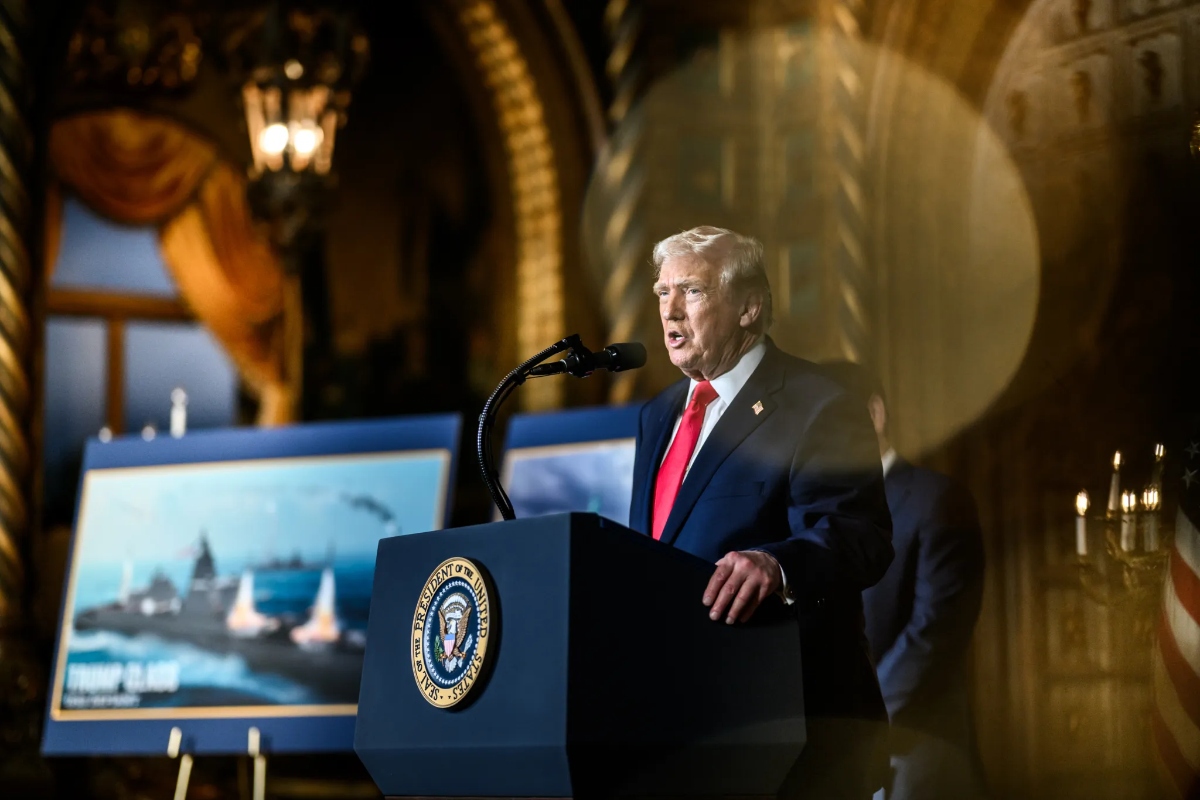

The United States has carried out a military operation in Venezuela that has fundamentally shifted the country’s political and economic landscape. This past 3rd of January, U.S. forces struck selected targets, detained President Nicolás Maduro, and transferred him to U.S. custody, where he is facing federal charges including drug trafficking and conspiracy. President Donald Trump has confirmed the operation publicly and has said that Washington will oversee Venezuela’s transition, stating that “we’re going to run the country until such time as we can do a safe, proper and judicious transition.”
In the same remarks, Trump placed Venezuela’s energy sector at the center of plans for the interim period, saying that “we’re going to have our very large United States oil companies, the biggest anywhere in the world, go in, spend billions of dollars, fix the badly broken infrastructure, the oil infrastructure, and start making money for the country.”
The operation and its following statements immediately drew global attention. Financial markets, energy traders, and compliance teams began recalibrating risk exposure as the scale of U.S. involvement became clear.
Trump has outlined a transitional role
Following the operation, Trump described a temporary U.S. administrative role in Venezuela, emphasizing that Washington would step into both political and economic oversight. He said the country’s institutions and infrastructure had deteriorated to a point requiring intervention, and that U.S. oversight would continue until a safe and structured transition could be implemented. While he has not provided a detailed timeline or governance plan, the implications for policy, regulatory frameworks, and local administration are immediate.
This transitional approach has created a highly unusual scenario for global markets, with the United States now directly involved in managing a sovereign country’s economic and industrial infrastructure. Investors, regulators, and banks are evaluating how temporary oversight may interact with existing sanctions regimes, trade agreements, and energy contracts. Compliance teams are modeling operational and regulatory implications, including potential exemptions for U.S.-based energy companies and adjustments to cross-border payments and trade finance channels.
Beyond immediate market reactions, analysts are examining long-term structural consequences. The move raises questions about precedent for future interventions in resource-rich nations and highlights the increasing intertwining of geopolitics and financial market operations. The transitional model outlined by Trump has signaled that oversight and operational decisions could be heavily influenced by U.S. policy priorities, adding a new layer of risk and opportunity for global investors.
Energy has featured prominently in official statements
Although Trump has not explicitly stated that oil was the primary motivation for the operation, he has repeatedly emphasized that Venezuela’s energy infrastructure requires urgent attention. He noted that U.S. oil companies would play a central role in restoring production and that the country’s oil output would increase under U.S.-supervised repair and management.
Market participants have reacted quickly to these statements. The possibility of large-scale U.S. involvement in Venezuela’s oil sector has implications for global supply, pricing strategies, and regional investment flows. Traders are assessing how quickly Venezuela could restore production to pre-sanction levels and the impact this may have on OPEC+ agreements and U.S. domestic production planning. Financial institutions and energy hedge funds have also begun stress-testing portfolios for potential exposure to Venezuelan operations.
This emphasis on energy also affects compliance frameworks. Banks, payment providers, and fintechs involved in Latin America have to reevaluate licensing, risk, and regulatory reporting obligations. Even temporary changes in operational oversight require careful monitoring to ensure adherence to existing sanctions while exploring permissible transaction pathways. The combination of political uncertainty and the potential for high-value oil operations has created a rare environment where energy and financial markets intersect directly.
Venezuela’s oil infrastructure has remained largely intact
Venezuela’s oil sector has long been a defining feature of its economy. For decades, the country has held some of the largest proven oil reserves in the world, a legacy dating back to the nationalization of its petroleum industry in the 1970s. Decades of state control under Petróleos de Venezuela, S.A. (PDVSA) shaped both domestic finances and global crude flows. In the early 2000s, former President Hugo Chávez used oil revenues to fund social programs and expand geopolitical influence, but chronic underinvestment and a lack of maintenance gradually diminished output. By the latter part of the 2010s, crippling sanctions and economic mismanagement had driven Venezuelan production down sharply from historic highs.
The past 3rd of January’s U.S. military operation, however, has not materially damaged Venezuela’s core oil infrastructure, according to Reuters sources familiar with PDVSA operations. Production facilities and refineries have continued functioning in the immediate aftermath, even as some non-oil port facilities were affected.
In his public remarks after the operation, Trump underscored the strategic importance of Venezuelan oil, emphasizing that U.S. energy companies would invest billions to repair infrastructure and restore production. Beyond the physical repairs, this signals that Washington intends to exert operational control over Venezuela’s energy sector during the transitional period. For markets, this introduces a rare scenario in which a foreign power is directly managing crude output, potentially affecting global supply, pricing, and the participation of private companies under U.S.-supervised conditions.
This unprecedented oversight raises significant questions about sovereignty. A foreign government controlling the oil industry of another nation challenges established norms of national autonomy and complicates both diplomatic relations and regional stability. Investors and policymakers must now consider not only operational and market risks but also the geopolitical implications of U.S. intervention, from potential pushback by allies and neighbors to long-term legal and governance disputes over resource management.
The regulatory and compliance dimension remains complex. Sanctions, licensing, and trade finance mechanisms that previously restricted oil flows may be temporarily adjusted to allow U.S. firms to operate, requiring banks, insurers, and fintechs to monitor permissible transactions closely. Even modest increases in Venezuelan production under U.S. oversight could influence benchmark prices, OPEC+ coordination, and risk assessments for investors with exposure to Latin American energy markets.
Legal, logistical, and diplomatic challenges persist. Restoring output is not just a matter of fixing infrastructure; it requires navigating international sanctions, ensuring financial compliance, and managing the tensions inherent in a foreign government operating key national assets. The combination of operational control, regulatory uncertainty, and the sovereignty dimension makes Venezuela’s oil sector a live test case for how geopolitics, markets, and financial systems intersect under extreme conditions.
Sanctions and financial compliance are under pressure
Venezuela has long been subject to U.S. and international sanctions affecting banking, payments, trade finance, and energy exports. Trump’s remarks about U.S. management of the country’s oil sector have raised questions about how these frameworks might be applied during the transitional period, and whether certain transactions could be temporarily permitted for U.S.-based firms.
Financial institutions and fintechs with exposure to Latin America are now reassessing compliance risk, updating licensing protocols, and monitoring cross-border payments and trade finance arrangements to avoid inadvertent violations. The situation underscores the importance of adaptable compliance infrastructures capable of responding to sudden geopolitical developments.
For cross-border payment platforms and fintech operators, Venezuela has become a live test case in navigating rapidly evolving regulatory and political risk. The intersection of sanctions, energy oversight, and political transition highlights how operational, financial, and legal considerations must be continuously recalibrated in real time.
International reactions have been sharp and specific
World leaders have articulated concrete opposition to the U.S. operation, often citing sovereignty and international law. In Brazil, President Lula da Silva took to social media platform X on January 3rd to denounce the strikes and capture of Nicolás Maduro, saying the actions “crossed an unacceptable line” and represented a “grave affront to Venezuela’s sovereignty and yet another extremely dangerous precedent for the entire international community.” He urged the United Nations to respond decisively to what he called a serious breach of international norms.
Mexico’s President Claudia Sheinbaum also publicly condemned the intervention. Asked about the situation in a Fox News interview, she reiterated that Mexico “strongly condemns and rejects the military actions” and underscored that the strikes were inconsistent with the United Nations Charter, reflecting Mexico’s long‑held position against foreign military intervention without international mandate.
Leaders beyond Latin America also voiced criticism. Spain’s Prime Minister Pedro Sánchez described the U.S. intervention as a violation of international law in remarks released in a government statement, saying that “the use of force without United Nations approval undermines legal norms that protect sovereign states.”
Countries outside the region echoed similar concerns. Russia’s Foreign Ministry urged the U.S. to reconsider its approach and called for the release of Maduro and his wife, framing the action as a breach of diplomatic norms and urging dialogue rather than force. The United Nations Secretary‑General António Guterres said the operation set a “dangerous precedent”, stressing the importance of respecting the U.N. Charter and international law in all state conduct.
These statements illustrate how the U.S. action, especially the capture of a sitting head of state, has been interpreted as a direct challenge to established principles of sovereignty and non‑intervention, complicating the diplomatic environment in which markets and financial institutions must now operate.
Why FintechScoop is watching closely
From a fintech perspective, the situation in Venezuela illustrates how quickly geopolitical developments can impact financial infrastructure. Payments systems, trade finance platforms, and compliance tools are often the first to feel effects when sanctions regimes shift or governance arrangements change.
Trump’s statements tying political transition to energy sector oversight make Venezuela a live example of how state power, market operations, and fintech infrastructure intersect. For institutions operating across borders, the episode highlights the importance of adaptability, regulatory intelligence, and robust real-time monitoring.
A situation still evolving
The U.S. intervention in Venezuela is ongoing, and many details remain unresolved. What is clear is that Washington has assumed a direct role in the country’s transition, that energy has been emphasized in official messaging, and that financial and compliance markets are recalibrating in response. As further guidance emerges, institutions will continue to monitor closely. Venezuela has once again demonstrated how political actions can rapidly reshape market assumptions.
Frequently asked questions
What happened in Venezuela on January 3, 2026?
The U.S. conducted a military operation in Venezuela, detaining President Nicolás Maduro and placing him in U.S. custody, citing charges including drug trafficking and conspiracy.
What has Trump said about Venezuelan oil?
Trump emphasized that U.S. energy companies would invest billions to repair the “badly broken infrastructure” and increase production, framing this as part of the transitional oversight.
Could Venezuelan oil output increase significantly?
If U.S.-supervised repairs proceed, even modest increases in production could influence global crude benchmarks, OPEC+ coordination, and regional supply balances.
Related posts
New U.S. Sanctions Target Russia’s Oil Giants Rosneft and Lukoil
Oil and Gold Prices Rebound After Trump’s Meeting with Putin
Europe at the Fault Line of the US–China Tech Rivalry
