
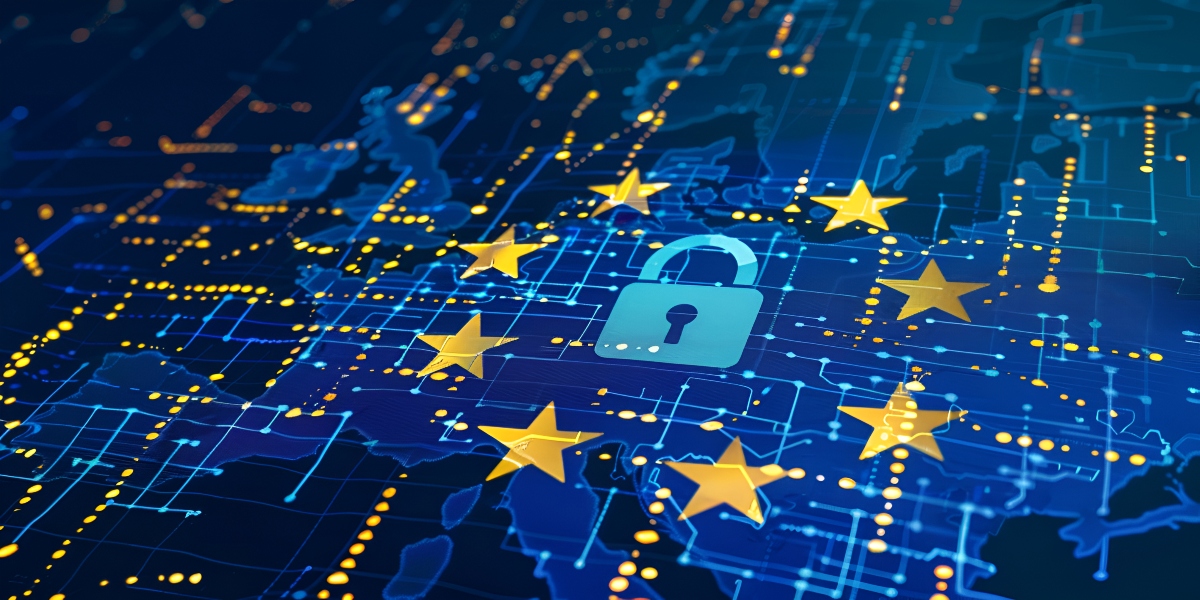

In today’s hyper-connected world, your online identity is more than a username or password, it is the gateway to financial systems, government services, and personal data. With fintech platforms, mobile banking, and digital wallets becoming ubiquitous, digital identities have emerged as a prime target for cyberattacks, fraud, and data breaches. From deepfake scams that impersonate executives to stolen biometric databases, attackers are increasingly exploiting vulnerabilities in identity systems. At the same time, regulators in Europe are introducing frameworks like GDPR, eIDAS 2.0, and the EU Digital Identity Wallet to secure these identities while fostering innovation. This intersection of regulation, technology, and risk has turned online identity into a cybersecurity battleground, where companies, governments, and individuals must navigate complex challenges to remain safe.
Why digital identity has become a prime target
Digital identity is the foundation of how individuals prove who they are online, enabling access to bank accounts, mobile wallets, healthcare services, and government platforms. As more people use fintech apps, online lending platforms, and cryptocurrency exchanges, the identity layer has become a primary attack surface for cybercriminals. In 2025, European authorities reported that nearly 40% of financial fraud incidents involved compromised digital identities, highlighting the growing stakes.
Cybercriminals exploit weaknesses in authentication, identity verification, and credential storage to commit fraud, launder money, or take over accounts. For example, in 2024, fraudsters used AI‑generated deepfake communication to impersonate senior executives and trick a finance worker into authorizing a $25 million transfer, illustrating the dramatic impact of identity‑focused cybercrime. Such cases demonstrate how digital identity is now central to both financial innovation and cyber risk.
Europe’s regulatory frameworks aim to mitigate these threats. GDPR (General Data Protection Regulation), introduced in 2018, set strict requirements for data protection by design and by default, forcing organizations to rethink how they handle personal data. Companies are required to implement strong encryption, pseudonymization, and breach reporting procedures, ensuring that identity data is not only collected but also protected throughout its lifecycle.
eIDAS 2.0 and the EU digital identity wallet
Building on GDPR, eIDAS 2.0 and the upcoming EU Digital Identity Wallet aim to create a trusted, interoperable identity framework across EU member states. Citizens will be able to access public services, bank accounts, and private platforms using a single, verified identity, designed with built-in security protocols.
This system promises convenience and trust but also creates new cybersecurity challenges. Centralized identity solutions are high-value targets for hackers, and integrating multiple services into one wallet increases the potential attack surface. Fintechs, banks, and government platforms must design systems that are both user-friendly and resilient to fraud, balancing accessibility with stringent security measures.
In practice, the EU Digital Identity Wallet allows users to store verified credentials, prove age, or confirm professional qualifications without repeatedly sharing sensitive data. While this reduces exposure to phishing and repeated KYC checks, it also makes the wallet a single point of failure if compromised. Analysts warn that redundancy, multi-factor authentication, and advanced encryption will be essential to secure these systems against sophisticated attacks.
Innovation vs Regulation: The fintech challenge
Technological innovation often outpaces regulation. AI-driven KYC (Know Your Customer) systems, biometric verification, passwordless login, and decentralized identity offer faster and more user-friendly experiences, but they also introduce new vulnerabilities. Facial recognition can be spoofed with deepfakes, voice authentication can be cloned, and decentralized identity wallets require users to safeguard cryptographic keys, errors that can lead to irreversible losses.
Fintech firms face a dual mandate: comply with stringent European regulations while pushing the boundaries of digital identity innovation. Many are adopting zero-trust security models, which assume that no user or device is inherently safe, and require continuous verification. In this context, identity itself becomes the new security perimeter, replacing traditional network-focused defenses.
Some fintech startups are exploring self-sovereign identity (SSI), where users control their credentials without relying on a central authority. While promising for privacy, SSI creates new attack vectors, such as key theft or phishing attempts that trick users into revealing access. Balancing security, regulatory compliance, and user experience remains one of the most complex challenges in digital identity today.
Global implications of European identity regulation
Europe’s regulatory approach is shaping cybersecurity standards worldwide. Many multinational companies adopt GDPR-compliant identity management systems globally, effectively setting an international benchmark. In Africa, Asia, and Latin America, governments and fintechs are looking to EU standards when designing national digital identity programs, blending security, privacy, and financial inclusion.
For instance, several African nations are rolling out digital ID wallets and mobile identity programs inspired by eIDAS and GDPR principles, helping users access government services and fintech apps securely. In the United States, fintechs that serve European clients must comply with GDPR, which has accelerated adoption of robust identity verification systems across borders.
Even beyond fintech, these regulations influence cryptocurrency exchanges, online marketplaces, and social platforms, where identity verification is critical for compliance, anti-money laundering (AML), and user protection. The ripple effect illustrates that digital identity security is a global concern, not just a European regulatory issue.
Real-world risks and user impact
For individuals, the stakes are high. Compromised digital identities can lead to financial loss, privacy breaches, and reputational damage. Imagine a user whose biometric data is stolen, unlike passwords, fingerprints or facial scans cannot be changed, leaving them permanently exposed. Similarly, stolen digital credentials can be used to open fraudulent accounts, obtain loans, or launder money, creating legal and financial headaches for victims.
Fintechs and regulators are responding by educating users on cybersecurity best practices, such as strong device security, multi-factor authentication, and careful handling of digital credentials. Yet, experts warn that even educated users can be targeted by sophisticated attacks, making regulatory safeguards and innovation equally critical.
The future of digital identity security
Looking ahead, digital identity is no longer a passive credential, it is a strategic asset, a regulatory obligation, and a prime target for cybercriminals. Emerging trends such as passwordless login, zero-trust verification, decentralized identity, and AI-driven authentication promise greater convenience but require careful risk management.
Fintechs and banks that can integrate compliance, innovative technology, and robust cybersecurity will set the standard for trust in the digital economy. Meanwhile, regulators must continue to adapt rules to evolving threats, ensuring that innovation does not outpace protection. The battle for secure digital identities is ongoing, and it will define how users, businesses, and governments interact safely in the digital world.
Frequently asked questions
What is eIDAS 2.0?
eIDAS 2.0 is the updated EU framework for interoperable, secure digital identities.
What is GDPR?
The General Data Protection Regulation is an EU law that protects personal data and requires secure identity management.
What risks come with digital ID wallets?
Centralized systems are high-value targets, and misuse or key theft can lead to identity fraud.
Related posts
European tokenized markets leap forward: Token City exchange gets CNMV approval
How Blockchain is taking root across Europe
Cybersecurity as a business priority in the digital era: A US$10.5 trillion threat
