

At SXSW London, Ben Cohen, co-founder of Ben & Jerry’s, delivered a clear message to entrepreneurs: if a company’s purpose matters, founders need to protect it from day one.
Cohen argued that too many businesses wait until they are established before thinking seriously about governance, ownership, and mission protection. By then, he warned, investors often hold enough influence to reshape the company’s priorities.
“The easiest time is when you first start the business,” Cohen explained. Once outside investors become deeply involved, changing a company’s structure becomes significantly more difficult and, in some cases, impossible.
His solution is simple: “Bake the mission into the legal structure of the company.”
Rather than relying on the goodwill of future executives, boards, or investors, Cohen believes purpose should be embedded into the foundations of the organisation itself. That way, social and environmental commitments cannot easily be abandoned when financial pressures arise.
One model he highlighted was steward ownership, a governance structure designed to keep control in the hands of people responsible for advancing the company’s mission rather than simply maximising financial returns. The goal is to ensure that a business remains accountable to its broader purpose over the long term.
Cohen also discussed what he described as a “B Corp Plus” approach. While B Corp certification has helped popularise the idea that companies should balance profit with social impact, he suggested that certification alone may not be enough. Companies should go further by creating ownership and governance structures that permanently protect their mission.

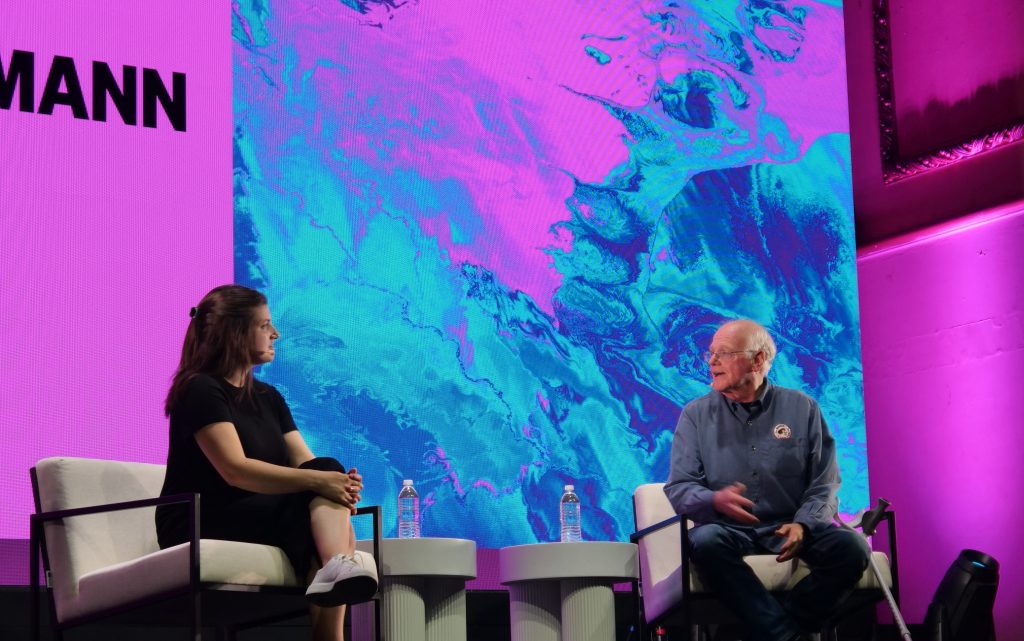
At SXSW London, Ben Cohen, co-founder of Ben & Jerry’s, delivered a clear message to entrepreneurs
Underlying the discussion was a challenge to one of business’s most common assumptions: that a company’s sole responsibility is generating profit.
According to Cohen, businesses can play a much broader role in society. A company does not need to be a non-profit organisation to pursue social or environmental goals. Commercial enterprises can actively support communities, advocate for positive change, and contribute to solving global problems while remaining financially successful.
Importantly, Cohen was not arguing that a company’s mission should remain fixed forever. Businesses evolve, industries change, and new challenges emerge. The specific mission may develop over time. What matters is creating a structure that ensures the company remains committed to being a force for good regardless of where it ultimately heads.
For founders, the takeaway was straightforward. If purpose is genuinely important, it cannot simply be written into a mission statement or displayed on a website. It must be built into the company’s legal and ownership structure before growth, fundraising, and investor interests begin to shape its future.
Because by the time investors hold the majority of the power, the opportunity to protect that mission may already have passed.
Author: Gian-Luca Esser