
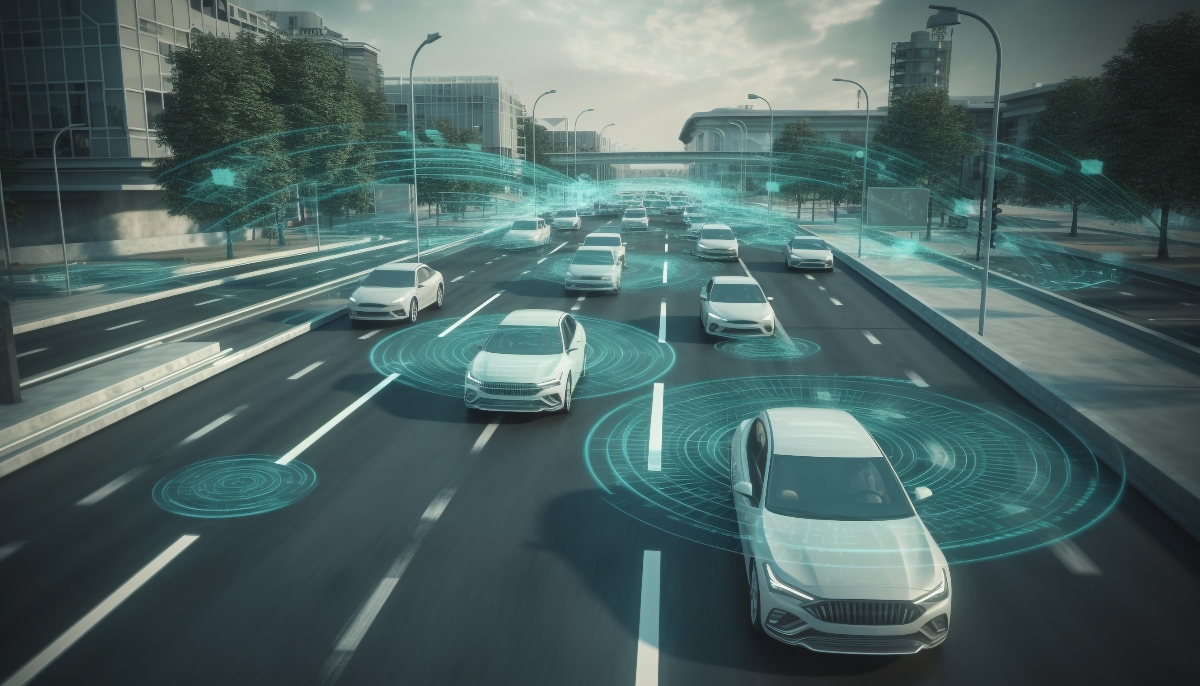

At CES 2026, Ford Motor Company unveiled a strategic technology push that combines artificial intelligence with advanced driver-assistance systems, signaling a future where vehicles function as intelligent partners rather than mere transportation. The company’s new AI assistant and enhancements to its BlueCruise hands-free driving technology highlight a broader industry shift toward smarter, more connected cars designed to simplify driving and anticipate user needs.
The announcement was made during Ford’s keynote presentation at CES, delivered by Ford CEO Jim Farley on January 7, 2026. Farley emphasized the company’s vision of integrating AI-driven services into both mobile apps and vehicles, positioning the brand at the forefront of next-generation mobility solutions. The presentation included live demonstrations of the AI assistant’s capabilities and the next-generation BlueCruise system, illustrating how these technologies can transform highway driving and everyday vehicle interactions.
This move positions Ford not just as an automaker but as a technology company navigating the convergence of software, hardware, and mobility services, signaling its ambitions to compete in a market increasingly defined by intelligence, connectivity, and user experience.
What Ford’s AI assistant represents
Ford’s AI assistant is designed to integrate first through the Ford and Lincoln mobile apps, with full in-vehicle deployment planned for 2027. Unlike conventional voice assistants, this AI leverages large language models hosted on Google Cloud but with deep access to vehicle-specific data, enabling responses tailored to an individual driver’s car. Users can, for example, query payload capacity or remaining oil life and receive precise, actionable insights, bridging the gap between generalized AI knowledge and real-world vehicle functionality.
By embedding contextual intelligence into vehicle data, Ford is signaling that AI will not only inform but also anticipate driver needs, from maintenance reminders to optimized driving guidance. This positions the automaker within a competitive space increasingly defined by software capabilities, where companies like Rivian and Tesla have already demonstrated the market value of intelligent, responsive interfaces.
BlueCruise evolution: from hands-free to eyes-off
BlueCruise, Ford’s Level 2 driver-assistance system, allows drivers to remove their hands from the wheel on pre-mapped highways known as Blue Zones, while maintaining attention to the road. As of 2026, BlueCruise is approved across 15 European countries, covering over 133,000 kilometers of mapped roads. The system manages steering, acceleration, braking, and lane positioning, reducing driver fatigue on long trips.
Ford’s next-generation iteration, slated for 2027, will integrate hardware that is 30% cheaper to produce, reflecting a deliberate strategy to broaden adoption beyond premium models. More importantly, the automaker has outlined a path toward Level 3 autonomy by 2028, allowing drivers to take their eyes off the road in controlled conditions. This represents a critical inflection point: the transition from assisting drivers to delegating full control in specific environments, a move that could redefine highway driving norms and customer expectations.
The technological framework behind Ford’s innovation
Ford’s approach combines cloud-based AI with vehicle-integrated systems to deliver scalable intelligence. The AI assistant relies on Google Cloud infrastructure, which provides the computational capacity necessary for advanced language understanding while maintaining a connection to real-time vehicle telemetry. This enables contextual responses that go beyond standard voice commands, effectively turning the app and, eventually, the vehicle into a personalized mobility platform.
BlueCruise complements this with a sophisticated array of sensors, cameras, and high-definition maps, allowing it to autonomously manage critical driving functions on highways. The synergy between AI guidance and autonomous control creates a platform where vehicles can interpret, act, and learn from user behaviors and environmental conditions. Ford’s incremental deployment, starting with app-based AI, followed by in-car integration, then hardware expansion, demonstrates a risk-managed pathway to autonomy, balancing innovation with regulatory compliance and safety considerations.
Implications for drivers and the automotive market
For consumers, Ford’s advancements promise a shift in the driving experience. The AI assistant transforms vehicles into interactive, data-aware companions, capable of responding to nuanced questions and offering tailored recommendations. Enhanced BlueCruise hardware lowers the barrier to entry for semi-autonomous driving, making advanced capabilities accessible to a wider customer base and setting the stage for subscription-based software services that can be updated over-the-air, a trend rapidly gaining traction across the auto industry.
Strategically, these developments position Ford at the intersection of automotive engineering and software innovation, signaling a move from selling hardware toward offering a mobility experience platform. This aligns with broader industry trends where the value of vehicles increasingly resides in software, services, and user engagement rather than raw mechanical performance alone. For companies, investors, and analysts, Ford’s roadmap indicates a careful balancing act between innovation, regulatory readiness, and mass-market feasibility.
Ford in the broader technological context
Ford’s announcements occur within a competitive landscape where traditional automakers are increasingly embracing AI and connectivity. Rivian has introduced its own AI-driven assistant and driver assistance features, demonstrating the market appetite for software-enhanced vehicles. Tesla continues to push updates in its Autopilot and Full Self-Driving systems, highlighting the importance of iterative software improvements. By contrast, Ford’s dual approach, combining cloud AI with advanced hardware deployment, reflects a strategy of scalable, phased adoption that mitigates risk while expanding capabilities.
This broader context underscores the evolving role of automakers: they are no longer just vehicle manufacturers but technology integrators, responsible for blending hardware, software, and user experience to create value in a market increasingly dominated by intelligence, connectivity, and personalization.
The road ahead for Ford’s AI and autonomous systems
Looking forward, Ford’s phased rollout suggests a deliberate strategy: AI assistance in the mobile app in 2026, in-vehicle AI integration in 2027, and expanded autonomy in 2028. Each step represents both a technological advance and a shift in user expectations, gradually redefining the driving experience from purely mechanical to intelligent, adaptive, and interactive. The combination of cost-efficient hardware, cloud-enabled AI, and mapped autonomy positions Ford to compete not just on cars but on the experience and capabilities those cars deliver.
Ford’s strategy exemplifies a measured yet ambitious embrace of next-generation automotive technology. By prioritizing incremental innovation, user adaptability, and regulatory compliance, the automaker is charting a course that could redefine its place in the automotive ecosystem and the broader mobility market.
Frequently asked questions
How is the AI assistant different from other voice assistants?
Unlike generic assistants, Ford’s AI connects to vehicle-specific data, so it can provide precise answers about your car, such as maintenance info, cargo capacity, or battery/fuel status.
Which cars will get these features first?
Ford has not yet confirmed exact models for the AI assistant or next-gen BlueCruise. Initially, the AI will appear in mobile apps, and BlueCruise updates will roll out in 2027 vehicles built on Ford’s Universal Electric Vehicle platform.
Are these features safe to use?
Yes. Ford’s AI assistant and BlueCruise systems are designed with safety in mind, following regulatory approvals and testing for hands-free and, eventually, eyes-off driving on designated highways.
Related posts
Shadow Banking 2.0: The Return of High-Risk Lending Vehicles
Rivian Slashes 600 Jobs Amid Cooling EV Demand and Strategic Shift Toward Affordability
Delaware Supreme Court restores Elon Musk’s 2018 Tesla pay package
