
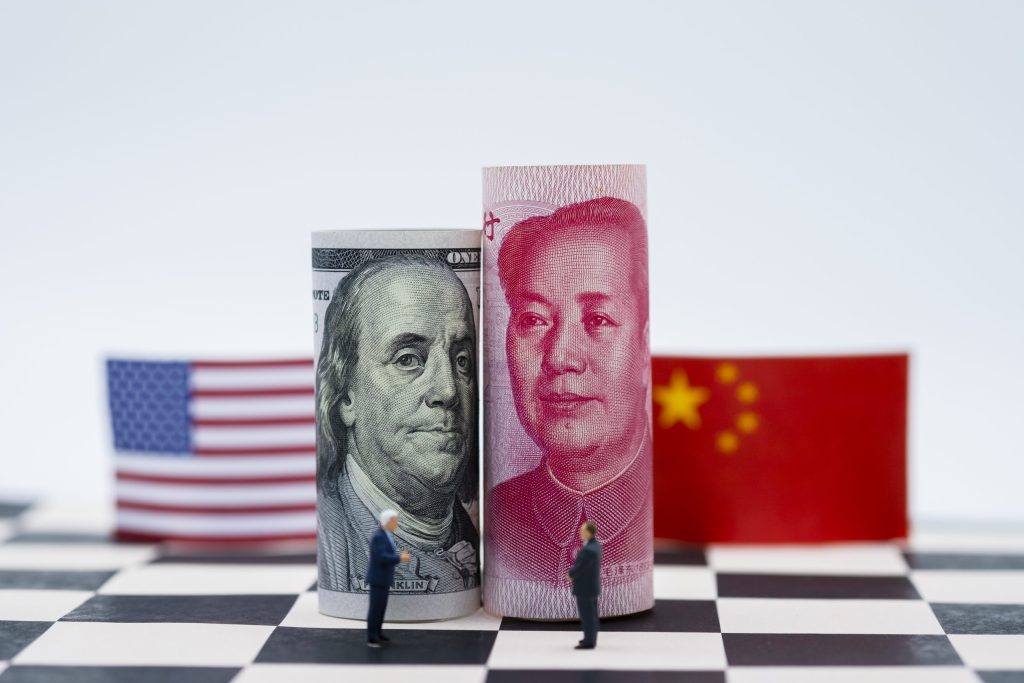
In a high-stakes summit held in Busan, South Korea, U.S. President Donald Trump and Chinese President Xi Jinping announced a significant reduction in U.S. tariffs on Chinese goods, declaring an immediate cut in exchange for Beijing’s commitments on fentanyl precursor controls, rare-earth exports and agricultural purchases.
The deal encompasses a reduction of the average U.S. tariff on Chinese imports to approximately 47% from 57%, including halving a 20% fentanyl-related rate to 10%. China meanwhile agreed to pause for a year its newly-announced export controls on rare‐earth minerals and to resume large-scale U.S. soybean purchases — approximately 12 million metric tons in the near term and 25 million per annum over the next three years.
The summit, marking the first face-to-face meeting of the two leaders since Trump’s return to the White House, lasted about two hours and concluded amid optimistic rhetoric: Trump rated the meeting “12 out of 10”. Financial markets welcomed the announcement with cautious optimism; however analysts stressed that deeper structural tensions, in technology, supply-chains and geopolitical rivalry, remain unresolved.
While the tariff reduction signals a de-escalation, the agreement is explicitly conditional on China’s cooperation in non-trade areas. Trump tied the tariff cut to Beijing’s promise to “work very hard” to halt the flow of fentanyl precursors into the U.S. —synthetic opioids remain one of the most acute public-health crises in America.
Similarly, the rare-earth export control pause relieves U.S. industry’s concern over Beijing wielding its dominance in critical minerals as leverage, but the pause is explicitly for one year, underscoring its provisional nature. On agriculture, the resumption by China of U.S. soybean purchases alleviates pressure on American farmers who were hit by retaliatory Chinese sourcing earlier in the trade war.
From a global markets lens, the agreement may reduce near-term supply-chain risk premiums and ease trade-war uncertainty. But it stops short of addressing fundamental issues such as advanced-chip export controls, China’s technology ambitions or broader decoupling of the U.S. and Chinese economies. In short: this is a tactical pause, not a strategic reset.
The next steps will be crucial: Trump has announced that he expects to visit China in April 2026, and China may send Xi to the U.S. in return. But the deal’s time-limit (one year pause on rare-earth controls) and the linkage of tariff relief to conditional actions suggest both sides retain exit options. Analysts quoted by the Atlantic Council warn that this is more of a “floor” than a “ceiling” for trade relations.
The Busan meeting between Trump and Xi produced a tariff cut and a pause in escalation. But beneath the applause lies a fact: this is less a re-engineering of U.S. –China relations than a tactical reprieve built on conditional commitments and time-bound concessions. For fintech firms, supply-chain financiers, tech-licensors and global investors, that means staying alert. The trade-war buzzer has been paused, but it remains very much in the arena.